Computational biology · Biophysics · Probabilistic machine learning
What can we reliably learn from noisy biological measurements?
I’m Manuel Razo-Mejia, a Scientist II in Computational Biology at Altos Labs.
I’m a computational biologist developing probabilistic machine learning methods and biophysical models to understand biological systems. My research spans single-cell genomics, evolutionary dynamics, and gene regulation. I combine mechanistic understanding with generative modeling and Bayesian inference to learn from noisy biological measurements.
Selected research
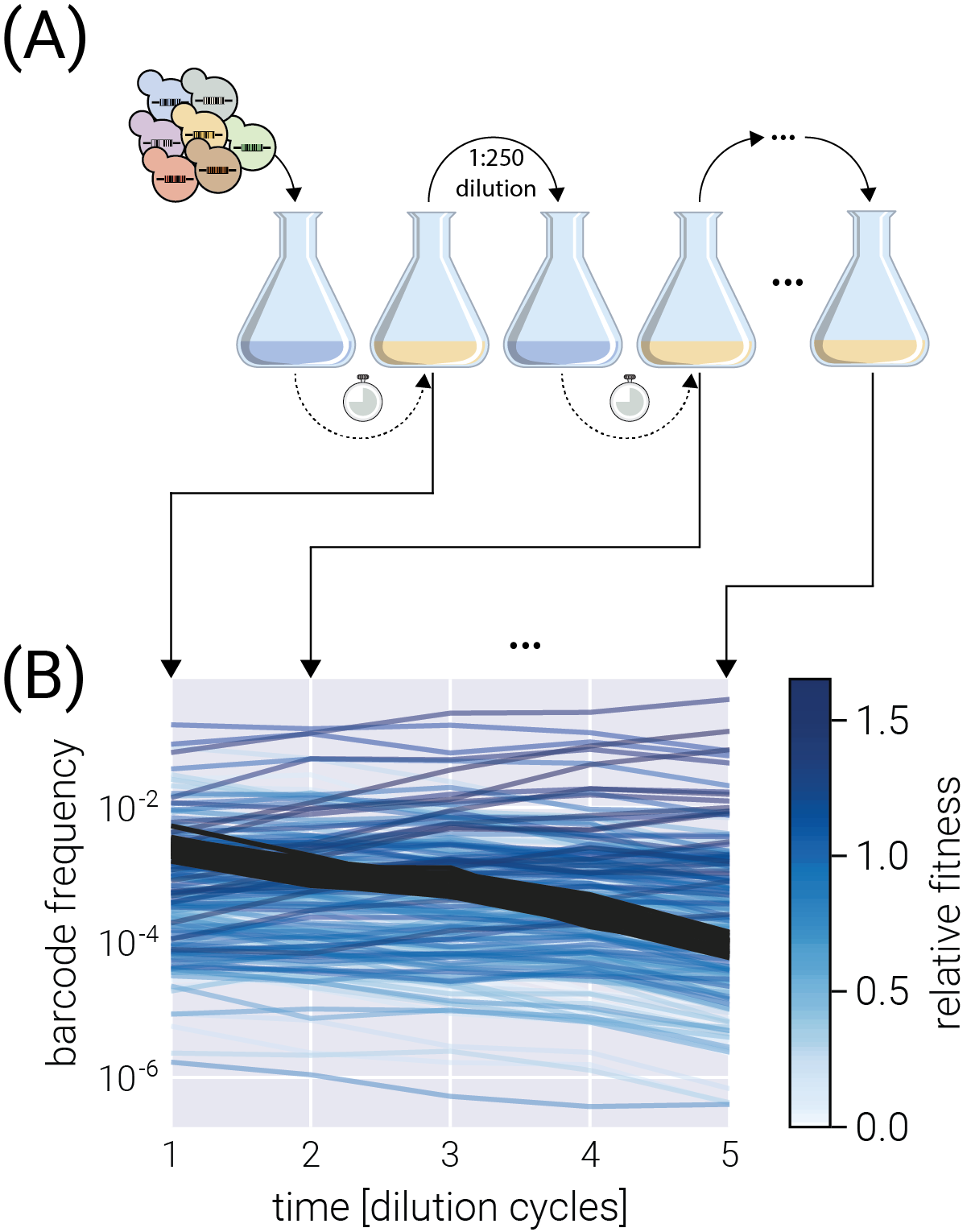
Measuring fitness with uncertainty
Bayesian inference for pooled competition assays, from DNA barcode counts to relative fitness estimates. Released as BarBay.jl.
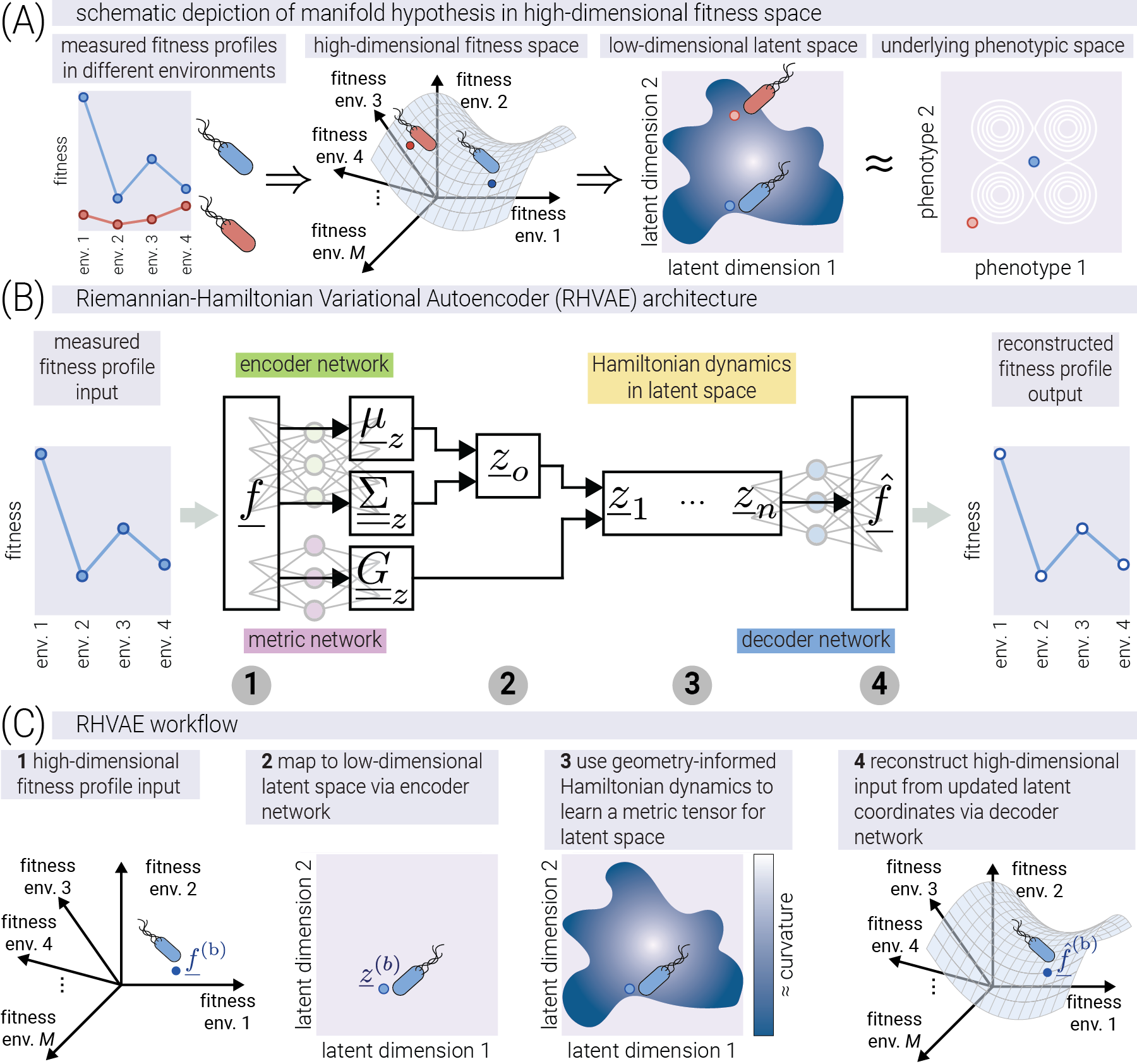
Learning evolutionary landscapes
Using geometry-aware autoencoders to uncover structure in phenotype-to-fitness maps and study antibiotic resistance.
Reliable single-cell inference
SCRIBE uses probabilistic modeling to account for measurement noise and uncertainty in single-cell RNA sequencing, with scalable Bayesian inference.
From measurements to models
I work across mechanistic modeling, probabilistic machine learning, and representation learning, choosing the method around the biological question. My experience performing experiments shapes how I model measurements and test predictions. I also build the software that lets other researchers inspect assumptions and reproduce an analysis.
Previously, I was a Schmidt Science Fellow and postdoctoral scholar at Stanford, following a PhD in Biochemistry and Molecular Biophysics at Caltech. More about my background.